The Most Popular Types of Wedding Flowers
Planning wedding flowers means juggling aesthetics, seasons, costs, logistics, and—more than ever—sustainability. Use this master reference from first moodboard to final bouquet.
- Starting with vibe or color? Jump to Choose by Color and Popular Blooms Deep-Dive.
- On a tight budget? See Budget & Value for US/UK benchmarks, cost drivers, and savings tactics.
- Eco- or pet-conscious? Head to Sustainability & Ethics and Safety, Allergies & Practicalities.
- Need a road map? Follow the Step-by-Step workflow and grab the checklists.
TL;DR: Choose palette → shortlist flowers (with substitutes) → pick bouquet/installation styles → set budget & reuse plan → book florist & logistics → confirm sustainability & safety → plan preservation.
What “Types of Wedding Flowers” Really Means
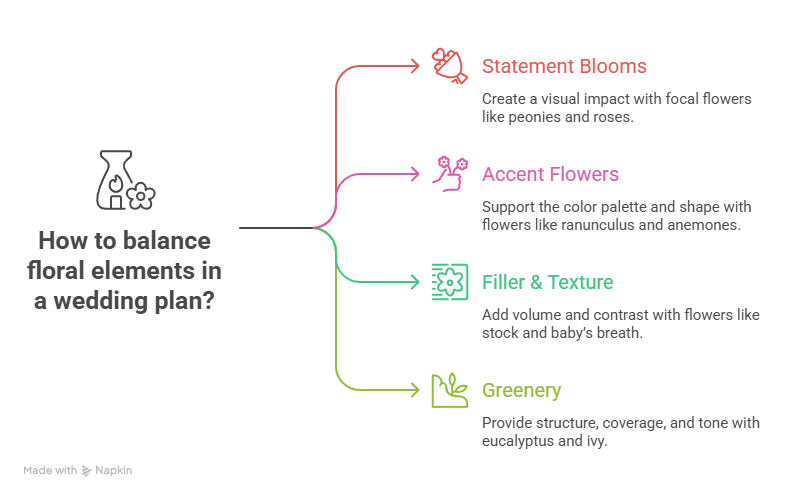
Every floral plan mixes different roles to achieve balance, texture, and value.
Roles in a Floral Plan
- Statement/focal blooms: Peonies, garden roses, protea, anthurium—big visual impact.
- Accents: Ranunculus, anemones, spray roses, delphinium—support palette & shape.
- Filler & texture: Stock, astilbe, waxflower, baby’s breath—volume & contrast.
- Greenery: Eucalyptus, ruscus, ivy, olive—structure, coverage, tone.
Why the Mix Matters
- Affects look (dimension vs. flatness) and budget (stem counts).
- Impacts logistics and care (heavier stems require support; hydration needs vary).
Quick Glossary
Focal vs. filler, stem count, boutonniere, corsage, mechanics (what holds designs together), and flip/reuse (ceremony → reception).
Choose by Color (Palette-First)
Color is the fastest on-ramp to a cohesive design. Shortlist stems by palette, then layer seasonality and substitutions for resilience.
How to Build a Palette
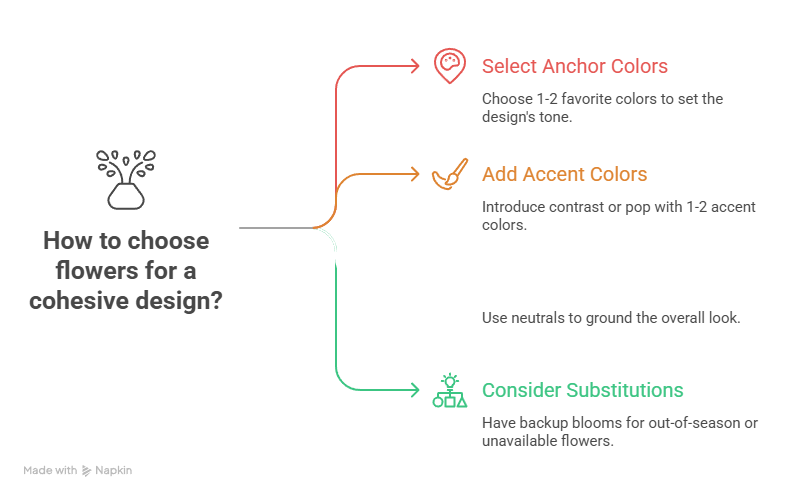
- Pick 1–2 anchor colors you love.
- Add 1–2 accents for contrast or pop.
- Decide on neutrals (white/ivory/cream) to ground the look.
Palette Cheat-Sheet
- Whites & Neutrals: Garden roses, ranunculus, white anemones, sweet peas, orchids, lily of the valley (premium).
- Pinks/Peaches/Blush: Peonies (spring), garden roses, ranunculus, tulips, dahlias (late summer–autumn).
- Reds/Burgundy: Roses, dahlias, ranunculus, scabiosa, amaranthus.
- Blues/Lavenders: Delphinium, tweedia, blue hydrangea, lisianthus, lavender.
- Yellows/Oranges: Tulips, ranunculus, marigolds (regional), dahlias, butterfly ranunculus.
Substitutions & Flexibility
- Always have 1–2 backup blooms per anchor (e.g., out-of-season peony → garden rose or double tulip).
- Expect hue shifts by grower/season; ask for stem photos in venue lighting.
Latest and Popular Artificial Flowers You Can't Miss!
Choose by Season (and Month)
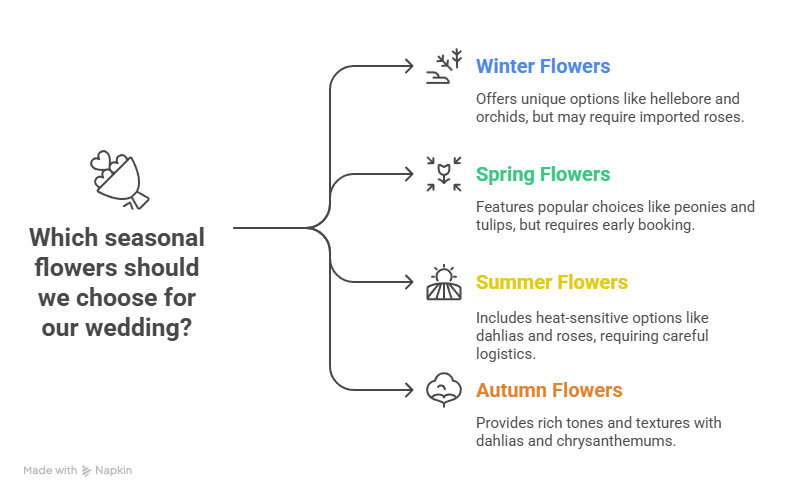
In-season stems are fresher and often better value. US couples should consider regional farming hubs and climate; UK couples can tap a strong local-seasonal network of small farms.
Seasonal Overview
- Winter (Dec–Feb): Hellebore, anemones, amaryllis, orchids; imported garden roses. Fewer local options—balance with foliage, candles, or dried pieces.
- Spring (Mar–May): Peonies, tulips, lilac, sweet peas, ranunculus, blossom branches. High demand—book early and prep peony substitutes.
- Summer (Jun–Aug): Dahlias, roses, hydrangea, zinnias, sunflowers (US), British garden varieties. Heat/hydration logistics matter.
- Autumn (Sep–Nov): Dahlias, chrysanthemums, amaranthus, antique hydrangea tones, seedpods/grasses.
UK note: Weather volatility can affect supply; build flexibility and substitutions into your stem list.
Bouquet & Arrangement Styles
Style influences stem count (cost) as much as it sets the vibe.
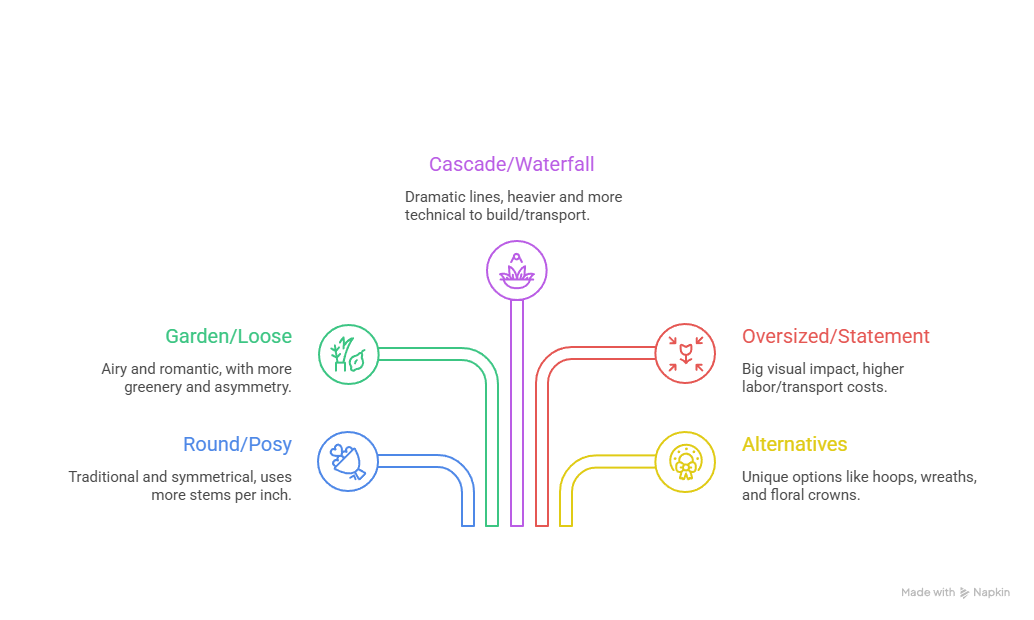
Bouquet Shapes
- Round/Posy: Symmetrical, compact, traditional; plush domes often use more stems per inch.
- Garden/Loose: Airy, romantic, textural; more greenery and asymmetry.
- Cascade/Waterfall: Dramatic lines; heavier and more technical to build/transport.
- Oversized/Statement: Big visual return; higher labor/transport.
- Alternatives: Hoop/wreaths, presentation/pageant bouquets, floral crowns.
Ceremony & Reception Pieces
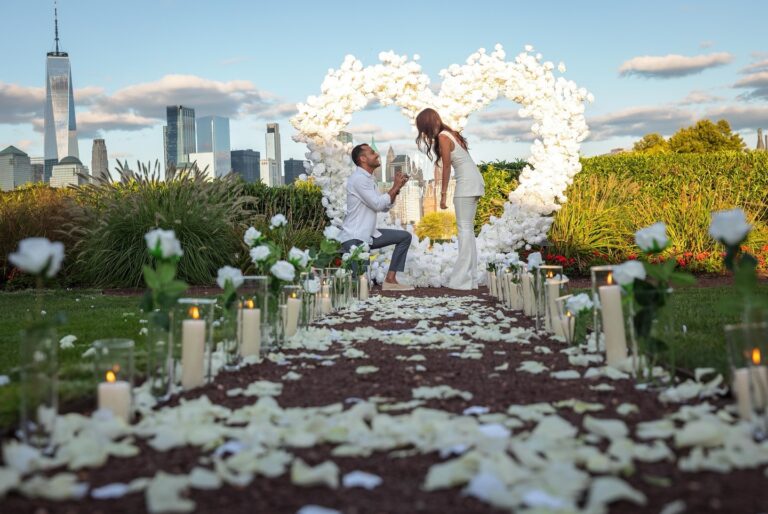
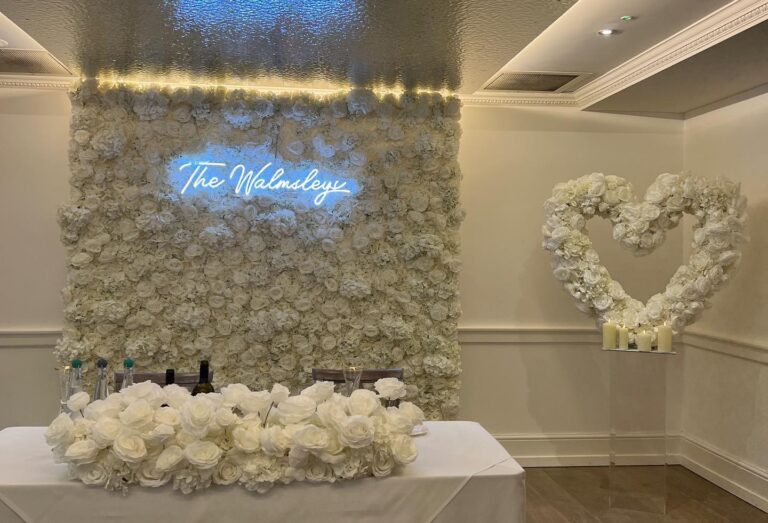
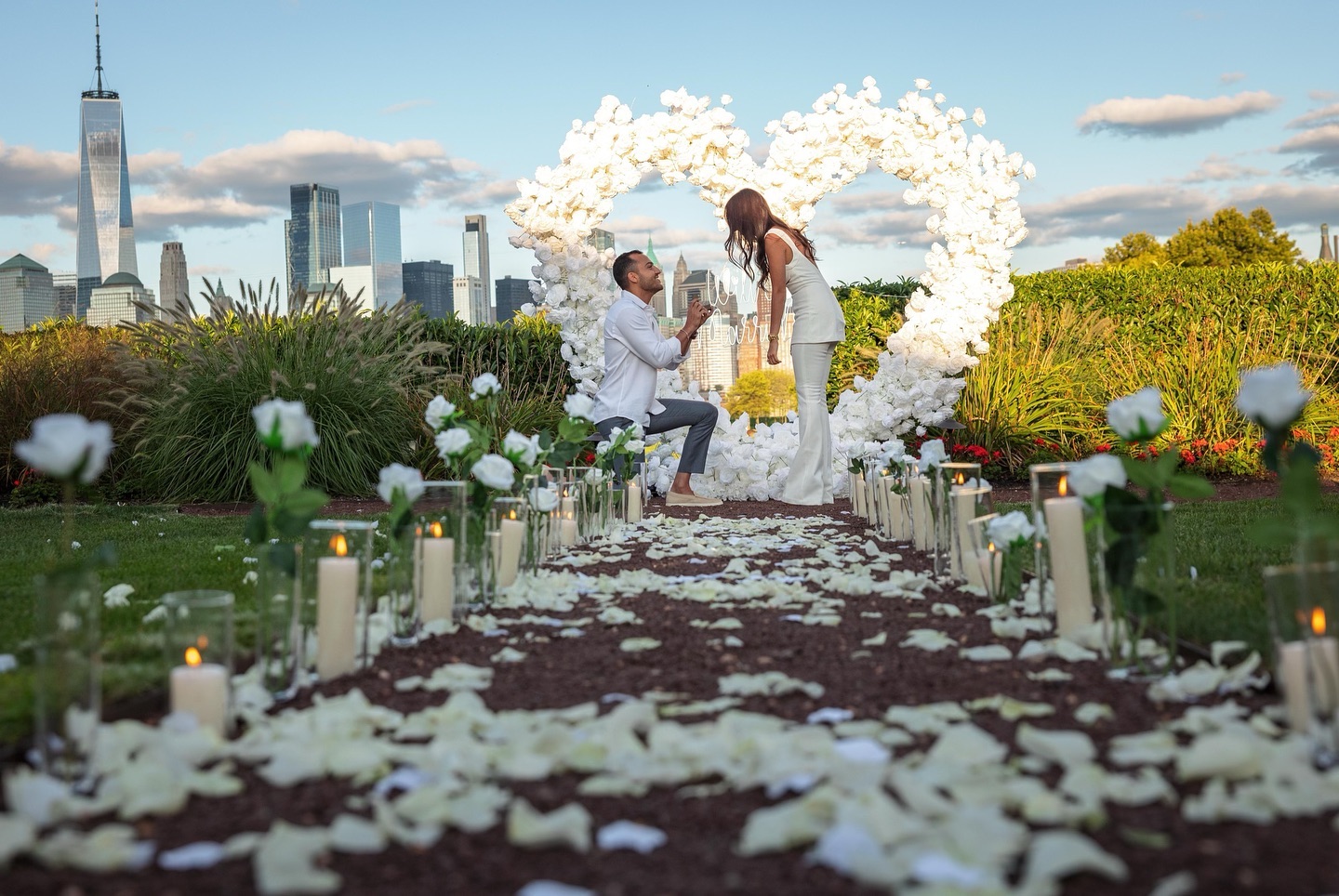
- Arches/chuppahs/backdrops, grounded “meadows,” aisle markers, altar urns, pew ends, mantels.
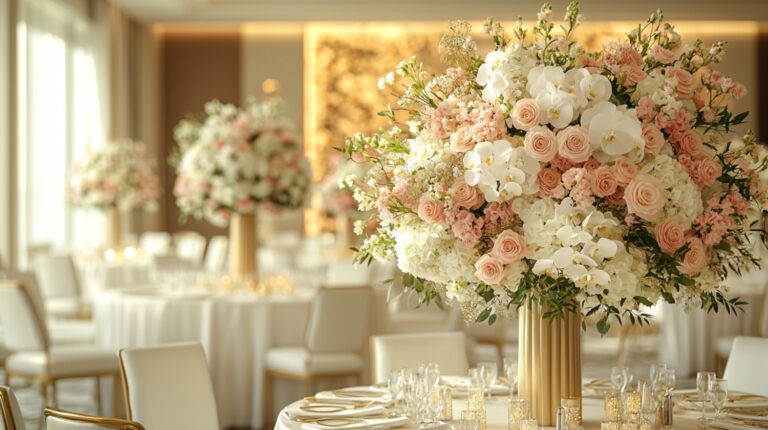
- Tables: tall vs. low centerpieces, bud-vase runs, lush runners.
- Reuse map: Move aisle meadows to head table; convert arch florals to entry or mantle pieces.
2025 Style Trends
- Sculptural/Ikebana-inspired minimalism
- Color-blocking & mono-bloom statements
- Grounded meadows & wildflower textures
- Fruit & candle styling integrated into centerpieces
Popular Blooms Deep-Dive (Profiles, Substitutes, Cost Tiers)
Use these concise profiles as a buying guide. Add photos, season windows by region, and substitutions.
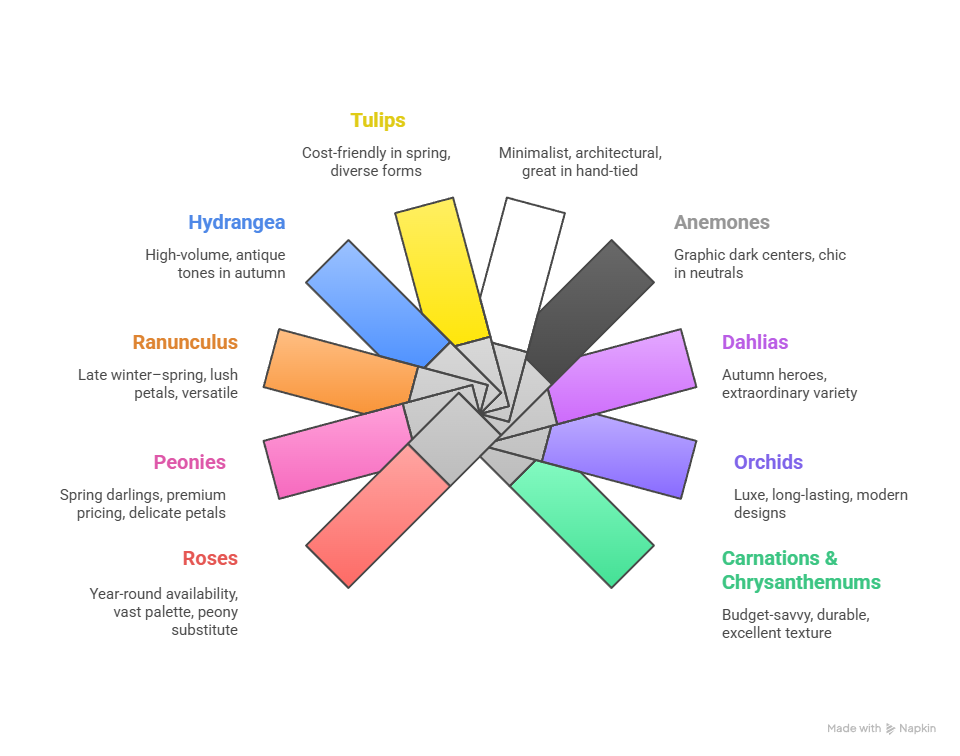
Roses (garden, hybrid tea, spray)
- Year-round via imports; vast palette; fragrance varies by variety.
- Tip: Garden roses are a strong peony substitute out of season.
Peonies
- Spring darlings; premium pricing; delicate petals and shorter vase life.
- Substitute with garden roses or double tulips when off-peak.
Ranunculus
- Late winter–spring; lush petals; versatile for personals; mid–high cost.
Hydrangea
- High-volume “mass” bloom; watch hydration; beautiful antique tones in autumn.
Tulips
- French, Parrot, and double forms; cost-friendly in spring; may “grow” in vases—design accordingly.
Calla Lilies
- Minimalist and architectural; great in hand-tied or pageant styles.
Anemones
- Graphic dark centers; chic in neutrals; stunning contrast in photos.
Dahlias
- Autumn heroes; extraordinary variety and scale; handle with care in heat.
Orchids (phalaenopsis, cymbidium, dendrobium)
- Luxe, long-lasting; strong lines for modern designs; excellent for installations.
Carnations & Chrysanthemums
- Budget-savvy and durable; huge color/shape range—excellent texture and scale.
Pro move: For both US and UK, note local vs. import expectations, and line up at least one backup bloom per focal.
Budget & Value
Benchmarks
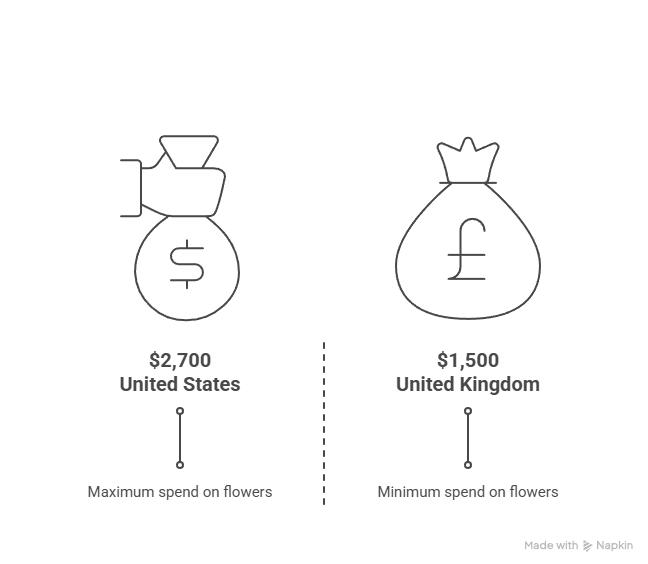
- United States: Many couples spend in the ~$1,500–$2,700+ range depending on scope and market.
- United Kingdom: Ranges vary by region and scale; use local guides as orientation, then price your exact brief with a florist.
Note: London, New York, the Cotswolds, and Northern California can price very differently. Installation labor, transport, and venue access rules are major variables.
What Drives Cost
- Stem choice & season: Out-of-season imports and premium varieties cost more.
- Scale & complexity: Arches, chandeliers, and meadows require time, mechanics, and strike teams.
- Logistics: Distance, parking, load-in windows, stairs/elevators, venue rules.
- Design density: Plush domes vs. airy bud-vase runs change stem counts dramatically.
Practical Ways to Save
- Mix premium focal stems with budget-savvy accents or greenery.
- Go in-season and local where possible (especially strong in the UK via local growers).
- Repurpose ceremony designs at the reception (plan mechanics and timing).
- Choose one hero installation and simplify elsewhere (candles + bud vases for tables).
- Discuss substitutions up front to avoid last-minute price spikes.
Sustainability & Ethics
Floral Foam & Changing Practices
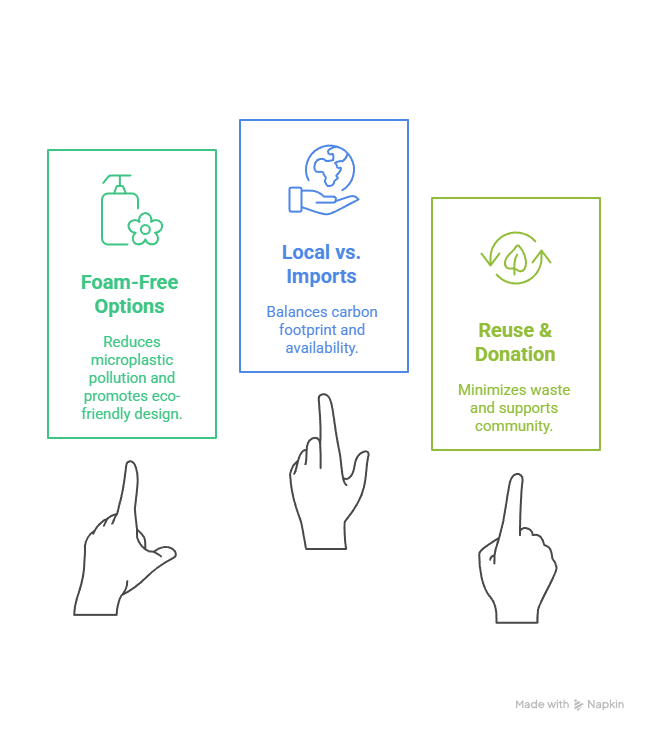
- Traditional floral foam is single-use plastic that sheds microplastics. Many designers are moving to foam-free methods or bio-based alternatives.
- Ask your florist: Foam-free plan, reusable armatures/vessels, donation and compost options.
Sourcing & Carbon: Local vs. Imports
Impact depends on energy use, transport, and growing methods. Don’t assume “local” is always greener or vice versa—have an informed conversation about trade-offs and availability.
Action List (Copy into your Email)
- “Please quote a foam-free option with reusable mechanics.”
- “Provide two substitutions per focal bloom by color.”
- “Outline reuse and end-of-night donation/compost plans.”
Step-by-Step: From Moodboard to Proposal
- Define constraints: Date, venue, climate, pets/allergies, sustainability stance, rough budget.
- Build palette & shortlist: 2–3 anchor flowers + 2 backups each by color family.
- Choose styles: Bouquet shape and 1–2 hero installations (arch, meadow aisle, mantle).
- Set a realistic budget: Use US/UK benchmarks to frame expectations; then price your exact scope with a local florist.
- Map reuse: Plan how ceremony florals shift to reception to stretch spend.
- Sustainability choices: Foam-free mechanics, reusable vessels, donation/compost plans.
- Lock logistics: Delivery windows, cooling/shade, access rules, teardown fees.
- Send a thorough brief: Date, headcount, palette, must-have/avoid list (e.g., lilies for cat safety), budget range, trend preferences, reuse map, sustainability asks.
- Get itemized proposals: Ask for two substitution paths (premium vs. value) and, if possible, a sample/mock.
- Confirm backups early: Especially for outdoor-grown UK supply where weather can curb availability.
Email Template to a Florist
Subject: Wedding Flowers Brief – [Your Names], [Date], [Venue / City]

Hi [Florist Name],

We’re planning our wedding on [date] at [venue/city]. Our palette is [colors], with must-have blooms [list] and backups [list].
We love [style/trend], want to avoid [e.g., lilies – cat safety], and aim for a foam-free, reusable approach if possible.

Scope highlights: [bouquet type], [ceremony install], [tablescape approach], [repurpose plan].
Budget range: [£/$X–Y].
Could you propose options with 2 substitutions per focal bloom (premium vs. value) and outline reuse/donation/compost logistics?

Thanks so much,
[Your Names]
Wrap-Up: 3-Line Action Plan
- List three must-have blooms and two backups (by color).
- Choose one hero installation and a bouquet style; plan one reuse move.
- Email two florists with your brief asking for foam-free options, substitution matrices, and an itemized proposal.